The Eiffel Tower: Vision, History, and the Paris Experience Today
Few monuments in the world are as instantly recognizable, or as emotionally charged, as the Eiffel Tower. Rising above Paris with quiet confidence, it has become a universal symbol of France, romance, and innovation. Yet the Eiffel Tower was never intended to be eternal. Conceived as a temporary structure, it was born from audacity, controversy, and an unwavering belief in progress.
More than a century later, it stands not only as Paris’ defining silhouette, but as a living monument, one that continues to evolve and reward those who experience it with intention.
Gustave Eiffel and a radical vision
The tower owes its existence to Gustave Eiffel, an engineer whose work consistently pushed the limits of 19th-century construction. Already celebrated for bridges, viaducts, and the internal framework of the Statue of Liberty, Eiffel proposed something unprecedented for the 1889 Exposition Universelle: a 300-meter iron tower that would surpass every structure ever built.
The reaction was swift and hostile. Artists and intellectuals denounced the project as an industrial intrusion into Paris’ classical skyline. Eiffel defended his design with conviction, arguing that structural logic could be beautiful, that modern engineering had its own aesthetic language. Time would transform skepticism into admiration.
The origin and construction of the Eiffel Tower
Construction began in 1887 and lasted just over two years, an extraordinary feat for the era. More than 18,000 prefabricated iron elements were assembled with remarkable precision, secured by millions of rivets. When the Eiffel Tower opened in 1889, it dominated the Paris skyline and captivated visitors from around the world.
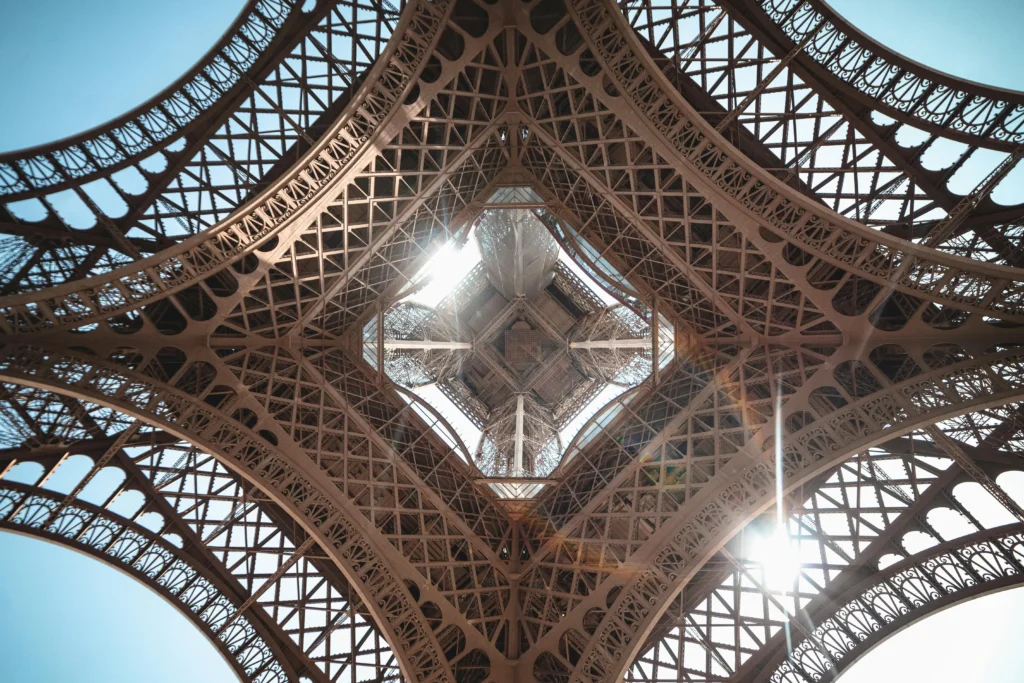
Originally intended to stand for only twenty years, the tower survived thanks to its scientific usefulness. Eiffel himself encouraged its use for meteorological studies and radio transmission, functions that ensured its permanence. What was meant to disappear became indispensable.
From bold experiment to Parisian icon
Throughout the 20th century, the Eiffel Tower witnessed Paris at its most dramatic and most joyful: world wars, liberation, celebrations, and global events. Gradually, its meaning shifted. Once criticized as industrial and disruptive, it became a symbol of elegance, ingenuity, and French identity. Its iron lattice, once shocking, now feels inseparable from the idea of Paris itself.
The Eiffel Tower today: views, access, and refined moments
Experiencing the Eiffel Tower today goes far beyond admiring it from below. Each level reveals a different perspective, from the architectural symmetry of the Champ de Mars to sweeping views over the Seine and the historic heart of the city.
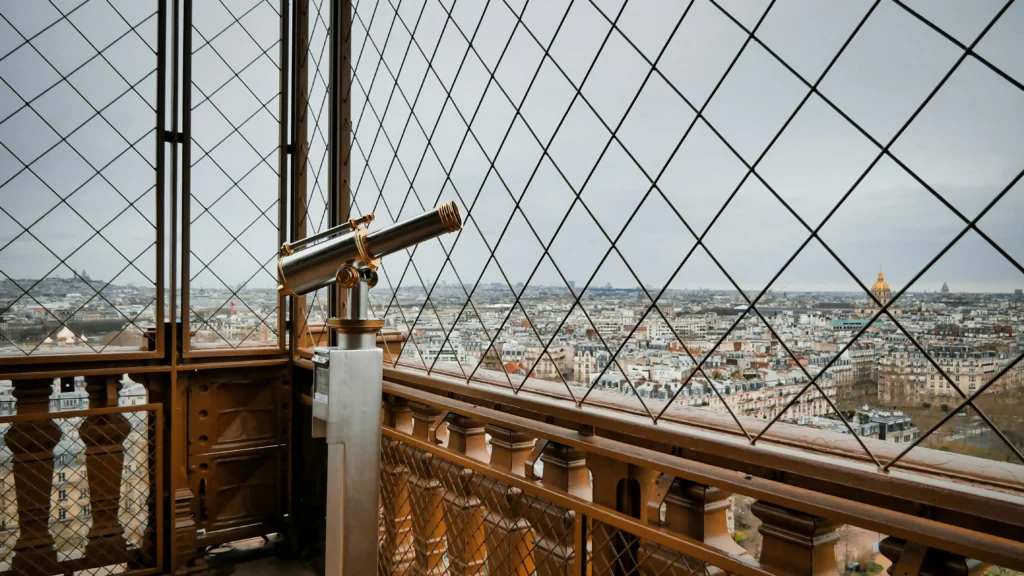
For those seeking deeper insight, private VIP tours offer access to areas of the tower not open to the general public. These behind-the-scenes visits reveal hidden technical spaces, and rarely seen viewpoints, bringing Gustave Eiffel’s vision and engineering brilliance into sharper focus. With expert guidance and privileged access, the monument feels less like a landmark and more like a living structure.
At the summit, the Champagne Bar invites visitors to pause above Paris with a glass in hand, an intimate, celebratory moment suspended nearly 300 meters above the city. It is one of the most unforgettable ways to mark a Parisian stay.
Lower down, a contemporary brasserie offers modern French cuisine in a relaxed yet remarkable setting, allowing guests to linger within the tower’s structure itself.
For the most elevated experience, Le Jules Verne stands apart. This Michelin-starred restaurant combines exceptional gastronomy with a setting unlike any other, where refined cuisine, architectural daring, and panoramic views converge into a singular Parisian moment.
When night falls: the tower sparkles
As darkness settles, the Eiffel Tower reveals one of its most enchanting rituals. Every hour on the hour after nightfall, the tower sparkles for five minutes, its thousands of lights shimmering across the Paris skyline. What began as a celebratory gesture has become a nightly spectacle, quietly reminding viewers that even the most familiar monument can still inspire wonder.
Seen from a bridge along the Seine, a private terrace, or from within the tower itself, the moment feels timeless.
A monument that rewards intention
The Eiffel Tower is often described as a must-see, but for discerning travelers, it becomes something more when experienced thoughtfully. Timed visits, private access, expert context, and carefully chosen moments transform it from iconic to unforgettable.
More than a monument, the Eiffel Tower is a story of vision rewarded, of an idea once rejected that came to define a city. And today, it continues to offer not just views, but rare moments of elevation, celebration, and quiet awe.
If Paris has a heart, it beats in iron, sparkling softly above the Seine.